
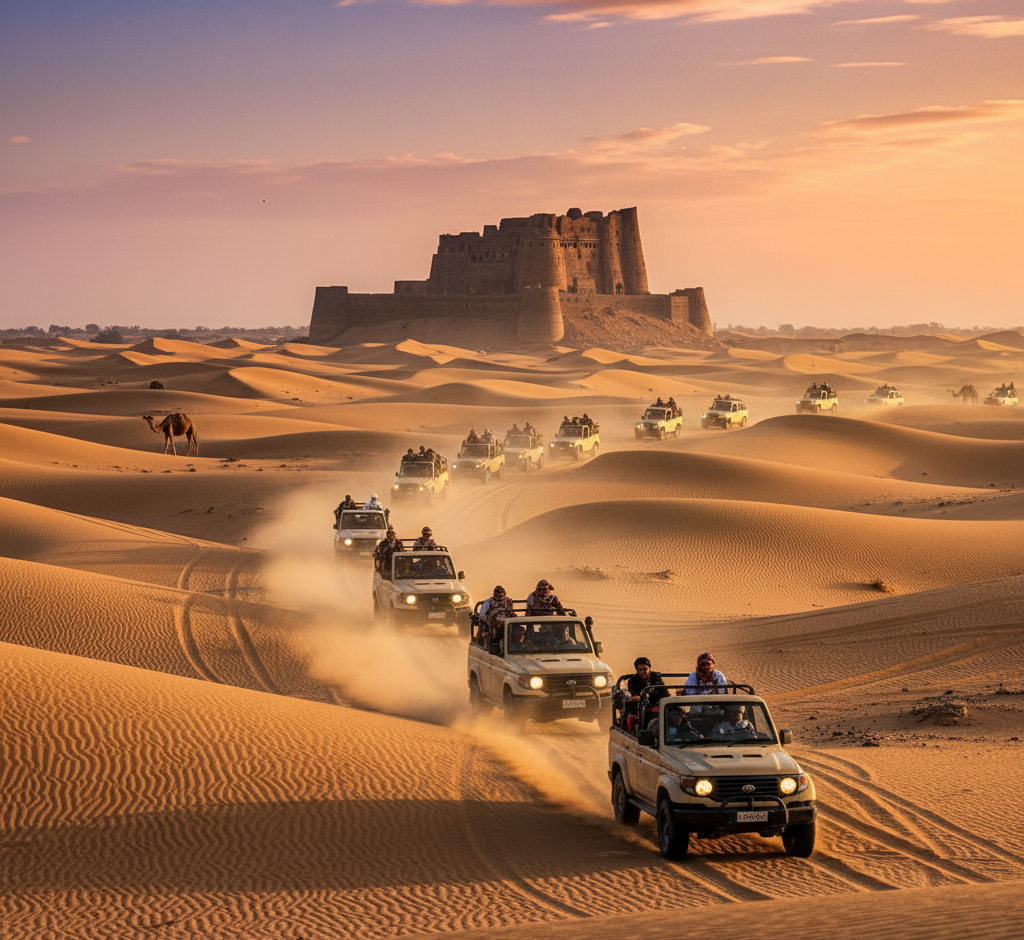

(In winter, Southern Pakistan offers a tranquil setting to explore the wonders of the region of five rivers, Punjab. It is an interesting vacation where each day opens the flap to a new corridor of mild adventure, thriving archaeological sites, architecture, rich culture, and landscape. The Cholistan Desert covers 26,300 square kilometres of land. Due to the term “CHOLTurkish “‘s derivation, which implies desert, Cholistan is known as the Land of the Desert.
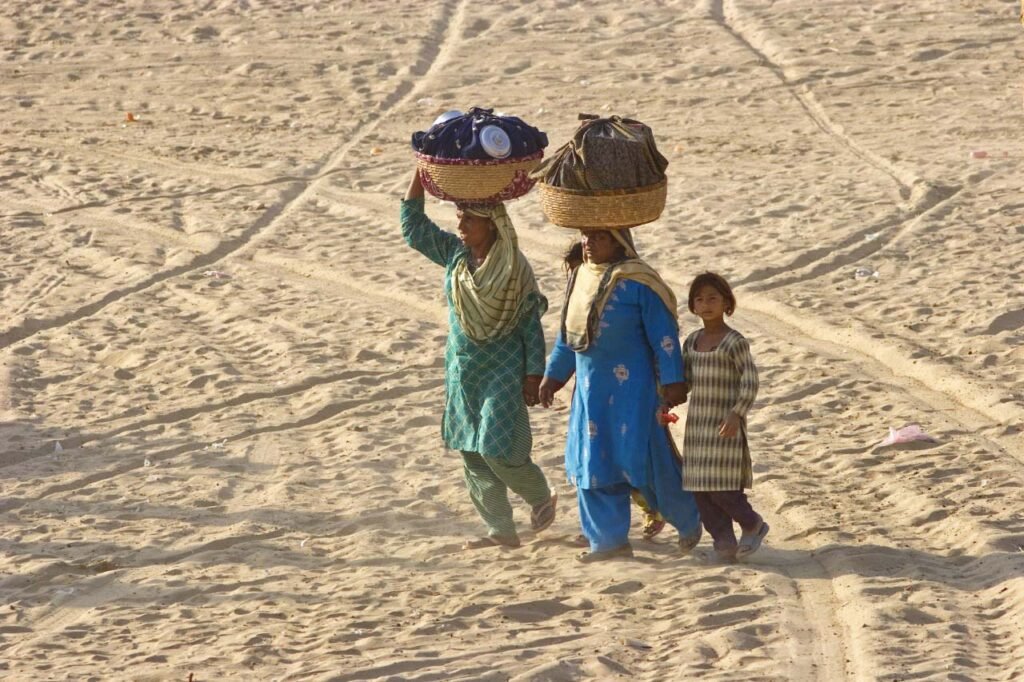
The Cholistan people have a semi-nomadic or partially nomadic lifestyle; they constantly move from one location to another, extending their stays when they come across plentiful water sources and pastures for their animals. We begin appreciating Multan’s Islamic Sufi monuments. The silky smooth waters of the Indus River welcome us after we have feasted our eyes on the city of Sufis.
We travel to the magnificent Cholistan Desert, often known as “The Land of Lost River,” where the joyous nomads greet us. The Cholistan Desert’s culture is so unique and stunning that it stands out significantly. The predominant fashion in this region is brightly coloured clothing with very subtle needlework worn by both men and women. To reach Derawar, the enormous Fort standing in the middle of nowhere, take the ship of the desert through the Cholistan Desert’s untamed terrain. It is a popular destination for international travellers. There are still remnants of the Nawab of Bahawalpur’s quarters in the fort, where it once served as his home. The silky smooth waves of the Indus River welcome us to the city of Sufis.
The Thar Desert in Sindh province and the Rajistan Desert in India continue in the Cholistan Desert. Our exciting journey begins in Islamabad and concludes in Lahore, a historic city that has served as the regional capital and administrative centre for numerous dynasties that have dominated the area. Because of its extensive cultural past, Lahore is often regarded as Pakistan’s cultural capital.